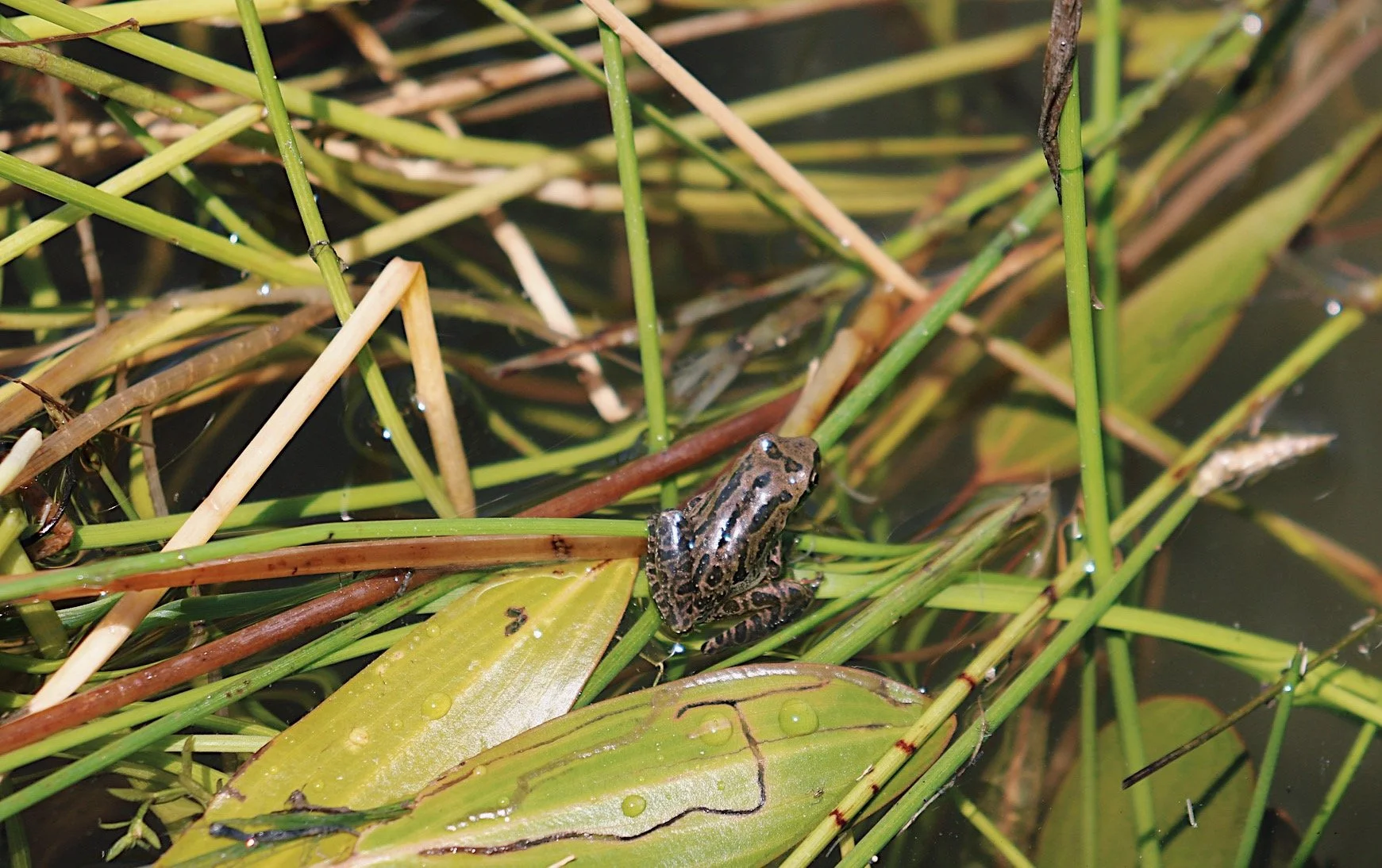
Disease is a growing threat to biodiversity conservation. My work is motivated by a desire to use disease control tools to conserve vulnerable wildlife populations. More specifically, I am investigating the feasibility and efficacy of a prophylactic treatment for protecting amphibians against the dire threat of chytridiomycosis.
Field trial to test the efficacy of a Bd-metabolite prophylaxis when applied to ponds
I tested the effectiveness of a chytridiomycosis prophylactic treatment when applied to ponds in the East Bay region of California. Learn more about this project here. The preprint of this study is available on bioRxiv as well.

Population-level responses to an imperfect wildlife vaccine
Different modes of resistance provided by vaccination can lead to divergent population-level disease outcomes (Barnett et al. 2020). I have built an agent-based model to assess potential population-level outcomes of chytridiomycosis vaccination under various vaccine efficacy and coverage scenarios. I’m also investigating how timing of vaccine administration, host birth pulses and natural immunity can influence outcomes of vaccination campaigns.
Individual-level responses to a chytridiomycosis prophylaxis
-
As observed in the case of Covid-19 vaccines, the efficacy of disease treatments can be sensitive to pathogen strain. In Barnett et al. 2021, we experimentally assessed the efficacy of same-strain and cross-strain prophylactic treatments and found an asymmetrical cross-strain resistance response.
-
Pathogen exposure history can greatly influence a host’s response to disease treatment. In Barnett et al. 2023 (in press), we found that prophylaxis was effective when tadpoles were treated prior to pathogen exposure but ineffective in tadpoles already exposed to live pathogen. This finding emphasizes the importance of considering timing of treatment application in disease-endemic ecosystems.